The hours nobody planned
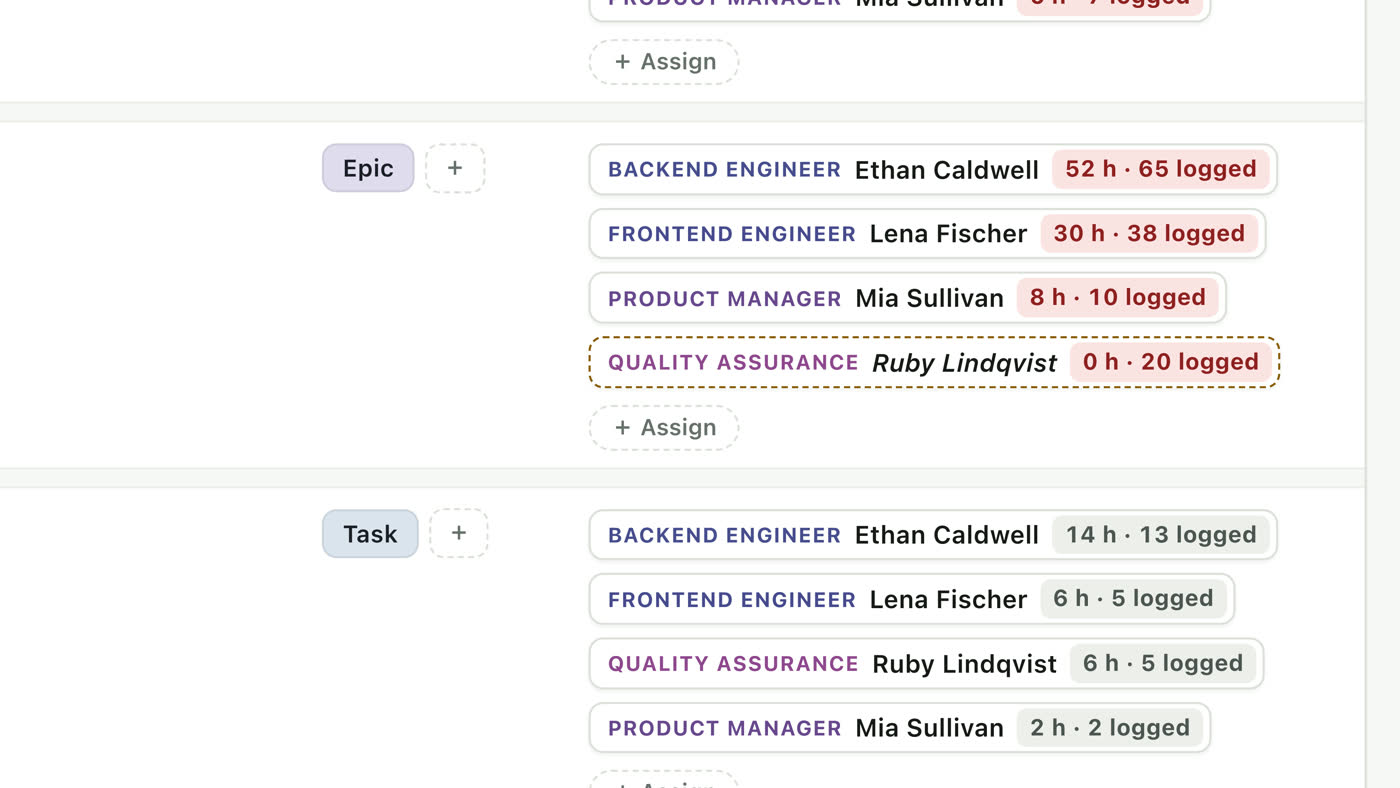
A manager opens a task and sees five people on it. Four of them logged hours. The fifth logged twenty — and she is not on the list, because nobody put her there.
This is not an edge case. It is what happens every sprint in every team that uses a tracker: the plan is typed by a human, the fact arrives from a machine, and the two are stored in different places. When the assignment is missing, the work disappears from the board entirely. The hours are in the workspace; whose row they belong to is not.
“Often a manager forgets a person, they log something, and it does not show here. And that is a problem for us.”
What Capaline does instead
Every task asks two questions, not one. Who is assigned — and who actually worked. The second answer comes from the worklog, and anyone in it who is not assigned gets added to the row: in italics, dashed, labelled found. Never silently merged with the plan, because a found hour is a fact, not a decision.
And the hours nobody can claim
Sometimes the author of a worklog is not in the workspace at all — a designer, an analyst, a DevOps engineer from a team that was never added. Those hours are counted separately and named, with the reason. Four different causes look identical on screen and are fixed in four different places; a single line saying “hours belong to nobody” sends people looking for a bug that is not there.
Start with one real sprint.
Connect Jira, pick a sprint, set your rates. Sixty seconds later you know what it costs and who will not make it.
Start free — 14 days